KSU Kennel - FCI
Certified FCI Kennel - KSU Jack Russell Terriers.

Smart
Energetic

Alive
2025.10.09: The website will be ready soon! We are actively working on content and improvements. We apologize for any inconvenience.

No puppies available
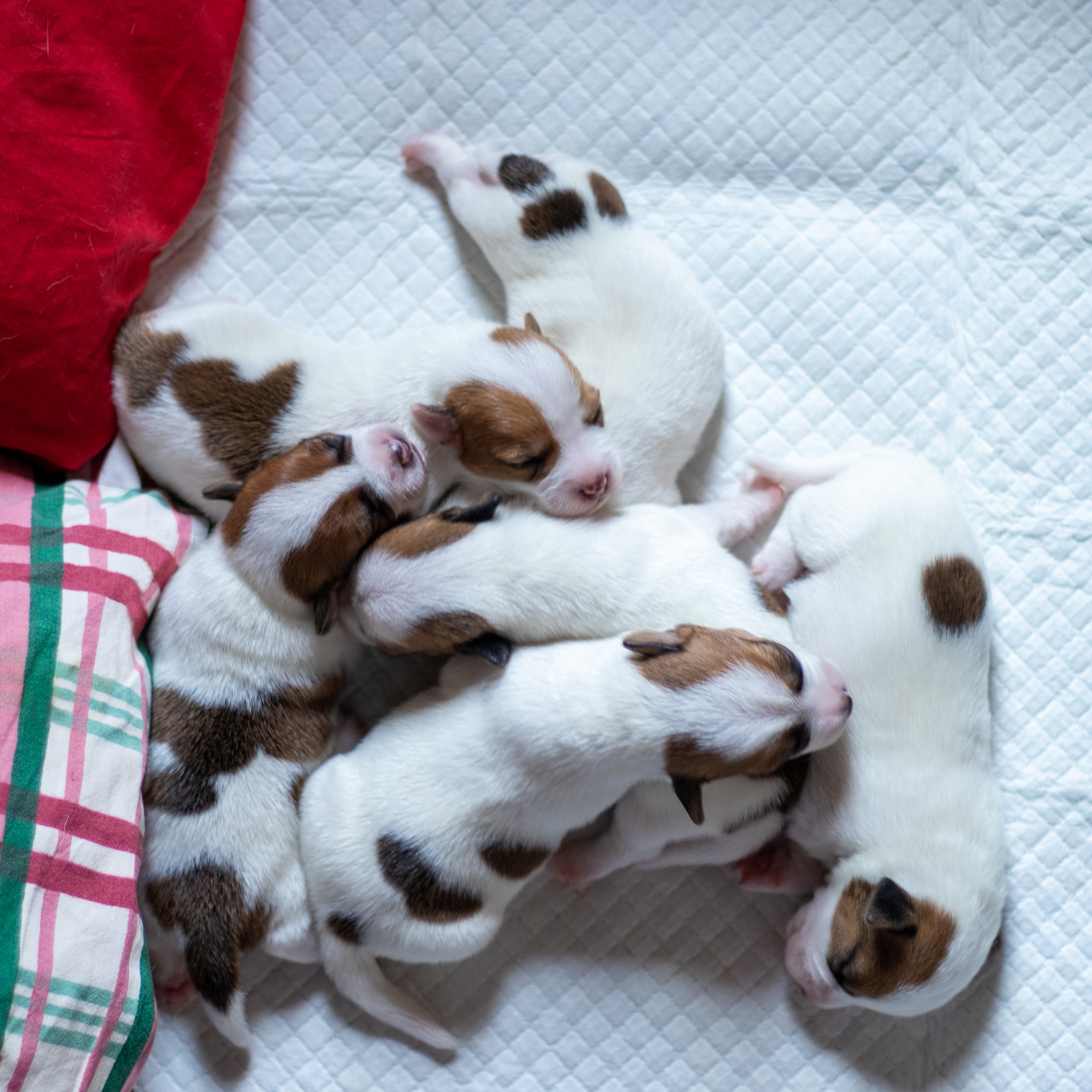
We currently have no available puppies. Follow our blog news section or social media for announcements of upcoming litters. You can also leave a request for early reservation and get the first pick.
Contacts


Smart but stubborn, independent. Training should be short, frequent, varied. Use positive reinforcement (treats, praise). Strict methods ineffective and inhumane.
With responsible care and nutrition, the average lifespan is 12–16 years. Some dogs live up to 17–18 years. This is relatively long-lived among dog breeds.
Yes. Formats and registration rules depend on national federations. KSU documents are recognized by FCI; AKC (USA) and KC (UK) documents are separate; importing a dog from another system may require re-registration/conversion. Country microchip/mark registers are not synchronized.
Train “come” in various environments, on a long leash for safety. Don’t release unsupervised until reliable. Redirect instinct with toys (ball, frisbee).
Price depends on the breeding value of the parents (champions, working lines) and includes kennel costs: vaccinations, microchipping, high-quality food, socialization. We always explain the price of each puppy individually.
Generally yes. Jack Russells are playful, affectionate, and usually good with children. It is important to train the puppy to interact with the child and supervise play to prevent injuries.
High-quality puppy food usually contains all vitamins/minerals. Supplements like calcium should only be given after vet consultation; excess is as harmful as deficiency. Vitamins are given based on tests and medical advice, not “just in case.”
Immediately after adaptation (2.5–3 months). Start with basic rules: no biting, toilet basics. Short daily sessions (5–10 min, several times/day). Introduce basic commands (“name”, “come”, “heel”, “sit”, “down”). Early socialization with people, dogs, and sounds is critical — leads to confident, obedient dogs.
Yes. Excellent for agility, flyball, frisbee. Start with basic fitness, then obstacles, tunnels, jumps. Many become champions in agility and parkour.
Moderate. Brush 1–2 times/month; heavier shedding in spring/fall.